
Backflow testing your fire sprinkler system: owners in WA, OR, and ID need to know this!
.avif)
Fire suppression systems are designed to protect buildings and the people inside them, but they are also directly connected to municipal water systems. Because of this connection, backflow prevention and regular testing are essential for protecting the safety of the public water supply. In states like Washington, Oregon, and Idaho, local water authorities and fire codes require routine backflow testing to ensure these systems operate safely and do not contaminate potable water.
Why Backflow Testing Matters
Backflow occurs when water flows in the opposite direction from its intended path in a plumbing system. This can happen during events such as water main breaks, hydrant usage by fire departments, or sudden pressure drops in the municipal water supply. When pressure changes occur, water from a building's fire sprinkler system can potentially be pulled back into the public water system.
Water that sits in fire suppression piping is not considered potable. Over time it can contain rust, stagnant water, pipe scale, and other contaminants. In some systems, additives like antifreeze or corrosion inhibitors may also be present. Without a properly functioning backflow prevention assembly, these contaminants could enter the municipal water supply.
Because of this risk, jurisdictions throughout western Washington, Oregon, and Idaho typically require annual backflow testing performed by certified technicians. Regular testing verifies that the internal check valves in the backflow device are operating correctly and preventing reverse flow.
How Backflow Testing Is Performed
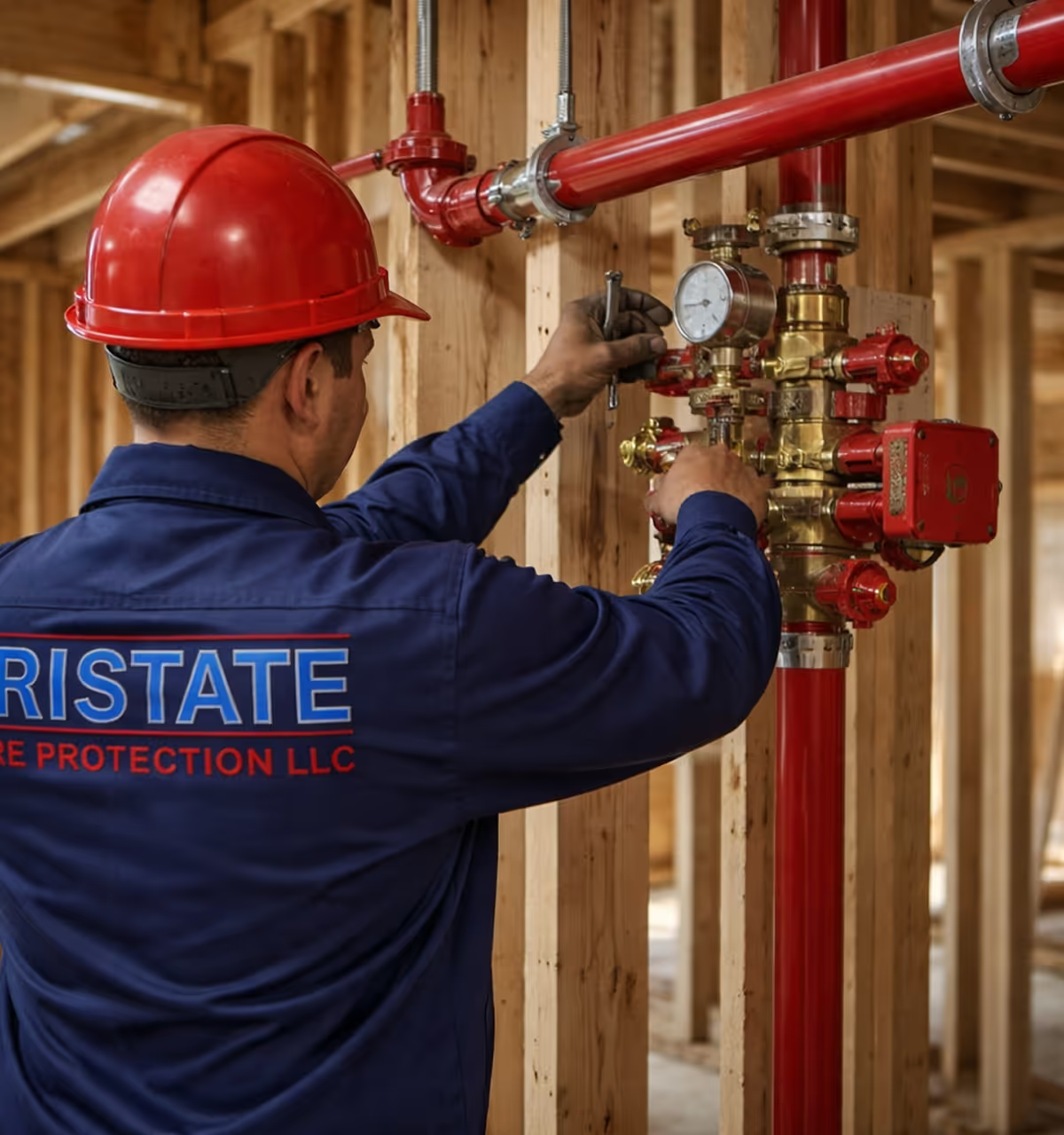
Backflow testing is a straightforward process when performed by a trained and certified technician. The technician connects a calibrated differential pressure gauge to the test ports on the backflow prevention assembly, measuring pressure differences across the internal check valves to confirm they are holding the correct pressure and preventing reverse flow.
Each valve inside the assembly is tested individually. If the device fails to maintain the required pressure levels, the technician may recommend cleaning, repair, or replacement of internal components. Once testing is complete, the system is returned to normal operation and documentation is provided for compliance with local water authority requirements.
Choosing a Backflow Testing Company
Building owners and property managers should work with companies that specialize in both backflow testing and fire suppression systems. In Washington, Oregon, and Idaho, technicians need certification recognized by local water authorities or state programs.
A qualified backflow testing company should also use properly calibrated testing equipment, maintain accurate documentation, and be familiar with regional compliance requirements. Many reputable providers will also offer repair services if a device fails testing, helping property owners resolve issues quickly and maintain compliance.
The Bottom Line
Backflow testing is a small but critical part of maintaining a fire suppression system. In the Pacific Northwest, regular testing helps protect municipal water systems, keeps buildings compliant with local regulations, and ensures fire protection systems remain safe and reliable.
For property owners in western Washington, Oregon, and Idaho, scheduling annual backflow testing with a certified provider is one of the simplest ways to protect both building safety and public water quality.
Need a backflow test?
We handle annual testing and same-day reporting for properties across WA, OR, and ID.
Request a quote
.avif)
.avif)